The second cheque on your claim
Most replacement cost claims pay twice. The second one has a date on it.
Good morning. This one is mainly for anyone who has had a claim.
If you had one in the last two or three years, for hail or wind or a burst pipe or ice at the roof edge, there may be a second payment still sitting with your carrier that nobody ever got round to asking for. It happens more than you would guess, and it is usually nobody's fault in particular.
If you have not had a claim, the last part of this letter is the bit for you.
Why there are two payments
Yesterday I said two words decide how a roof gets paid for, and they are actual cash value or replacement cost. You will find them in a section called Loss Settlement, in the conditions behind your declarations page.
Most people already know replacement cost is the better of the two, so I will skip that part. What matters more is that a replacement cost policy does not pay out all at once.
The first cheque covers the actual cash value, meaning what the damaged thing was worth the day before, with age and wear taken off it. The remainder gets held back until the work is finished and you have sent in proof that it was. That held-back money is called recoverable depreciation, and on a roof halfway through its life it can come to more than the first cheque did.
|
From the field I have sat in kitchens where the first cheque had been cashed eleven months earlier, the roof was on, the receipts were in a drawer in the same room, and nobody had ever rung to ask for the rest of it. |
The part that trips people up
There are two separate deadlines running on a claim, and they routinely get treated as though they were the same one, including by people whose job it is to know better.
The standard homeowners form says you may settle on an actual cash value basis and then claim the remainder, provided you notify the carrier of your intent to do so within 180 days of the loss. That covers telling them you plan to repair. Whether the repair is finished by then is governed by something else entirely, and the difference matters a good deal when somebody starts quoting dates at you.
Insurance Journal wrote up a hail case where a carrier told the homeowner those 180 days had run out and the claim would therefore be settled at actual cash value, quoting the same form language, which does not say that at all.
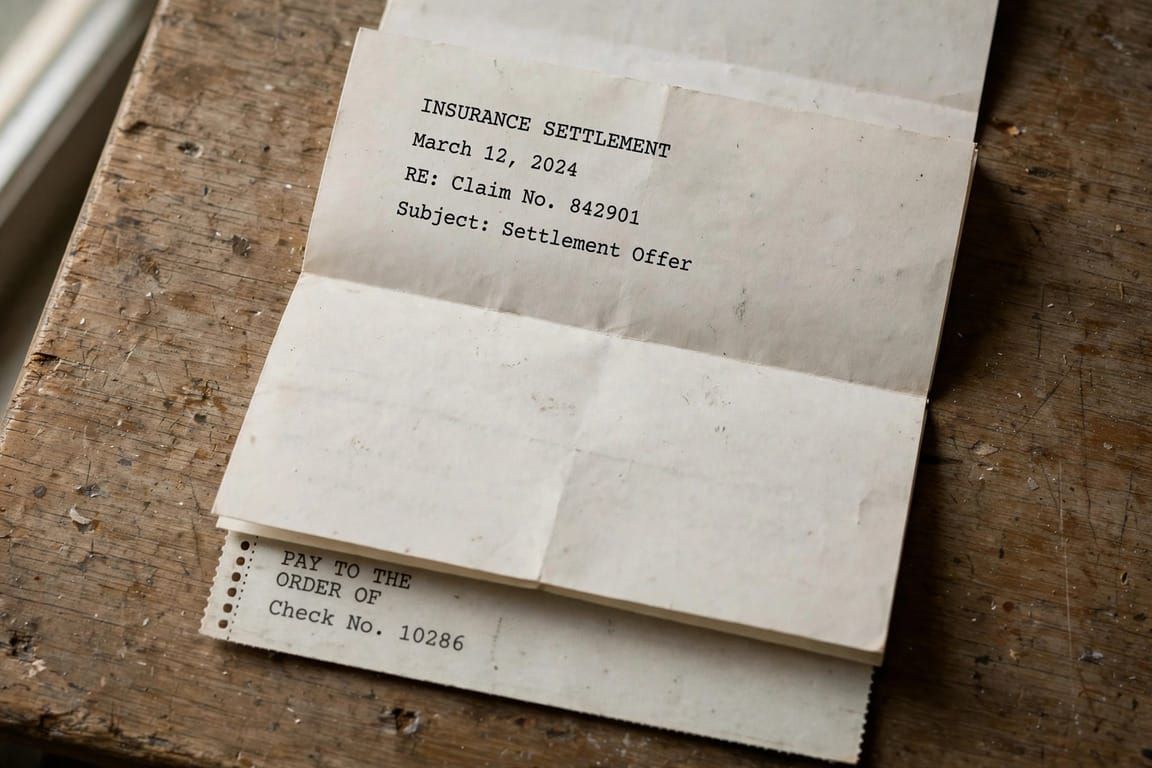
The completion deadline sits in the settlement letter that came with your first cheque rather than in the policy form, which is why so few people can find it when they need to.
What is on that letter
The timescales vary more than you would expect. Liberty Mutual's own claims disclosure gives you six months from the later of your last actual cash value payment or a court order establishing your right to replacement cost. Other carriers run considerably longer. Louisiana wrote its own rule into statute, giving a year from the loss or from the payment, whichever falls later.
Whatever your carrier uses will be printed on the settlement letter, usually within the first page or two. The USAA version of that letter states a completion date outright and then adds that you may request a further 180 days in writing.
Extensions are ordinarily granted if you ask before the date passes and put the request in writing, which almost nobody does, since the date reads like boilerplate and gets skimmed along with everything else on the page.
I am not telling you the money is definitely sitting there. It depends on your policy, your carrier, whether the work was actually done and what state you live in. What I am saying is that one phone call settles the question, and the call costs nothing.
What it actually costs
|
If you had a claim in the last two years Dig out the settlement letter that came with the first payment and look through the first couple of pages for a date, or for the words recoverable depreciation. Then ring the claims number and ask whether there is withheld depreciation on the claim and what the deadline for it is. That is the whole conversation. If the work is done they will want invoices and proof of payment. If it is not done and the date is coming up, put a request for an extension in writing the same day, because a verbal one from a call centre is worth nothing when it gets disputed. |
|
If you have not had a claim Two minutes with the Loss Settlement section will tell you which basis applies to the dwelling, whether the roof has been carved out separately, and what the notice period is. Write down that last one somewhere you will find it again. |
I said yesterday that I would keep mentioning this until I rang my own carrier, and I have not rung them. It has been one day, so I am aware that starting the count here is not much of a showing.
|
180 days
What the standard form allows for telling your carrier you intend to repair. The same number gets quoted at people as though it were the deadline for finishing the work, which is a different thing sitting in a different document.
|
The money meter
| 30-year mortgage | 6.67%, down from 6.69% the week before. A new reading is due today, so this one is a week old. Freddie Mac PMMS, 13 Aug 2026 |
| 15-year mortgage | 5.96%, down from 6.01%. Freddie Mac PMMS, 13 Aug 2026 |
| Fed funds target | 3.50–3.75%, unchanged since 29 July. Federal Reserve, 29 Jul 2026 |
| Inflation | +3.4% over the twelve months to July. Core +2.5%. BLS, 12 Aug 2026 |
| Gas, national average | $4.06 a gallon. AAA, 17 Aug 2026 |
Where I stand today
The settlement letter is worth keeping, and in my experience it is generally the first thing to go out with the recycling once the cheque has cleared. Whether there is money waiting on your particular claim I have no idea. Of the things in this letter you could do this morning, the phone call is the only one that might end with somebody sending you money.
If you do make the call, write back and tell me what they said. I would like to know how often the answer turns out to be yes.
Tomorrow: two hundred dollars, and why that is roughly what your coin collection is worth to your insurer.
Read the policy before you need it. — Rita
Nothing here is insurance, legal or financial advice. I am a former claims adjuster, not an agent or a lawyer, and I do not know your house. Policy forms, carrier practice and state law all vary, so check your own paperwork and ask your carrier.